From Pill Bottles to PDF: How to Organize Your Medications in Minutes.
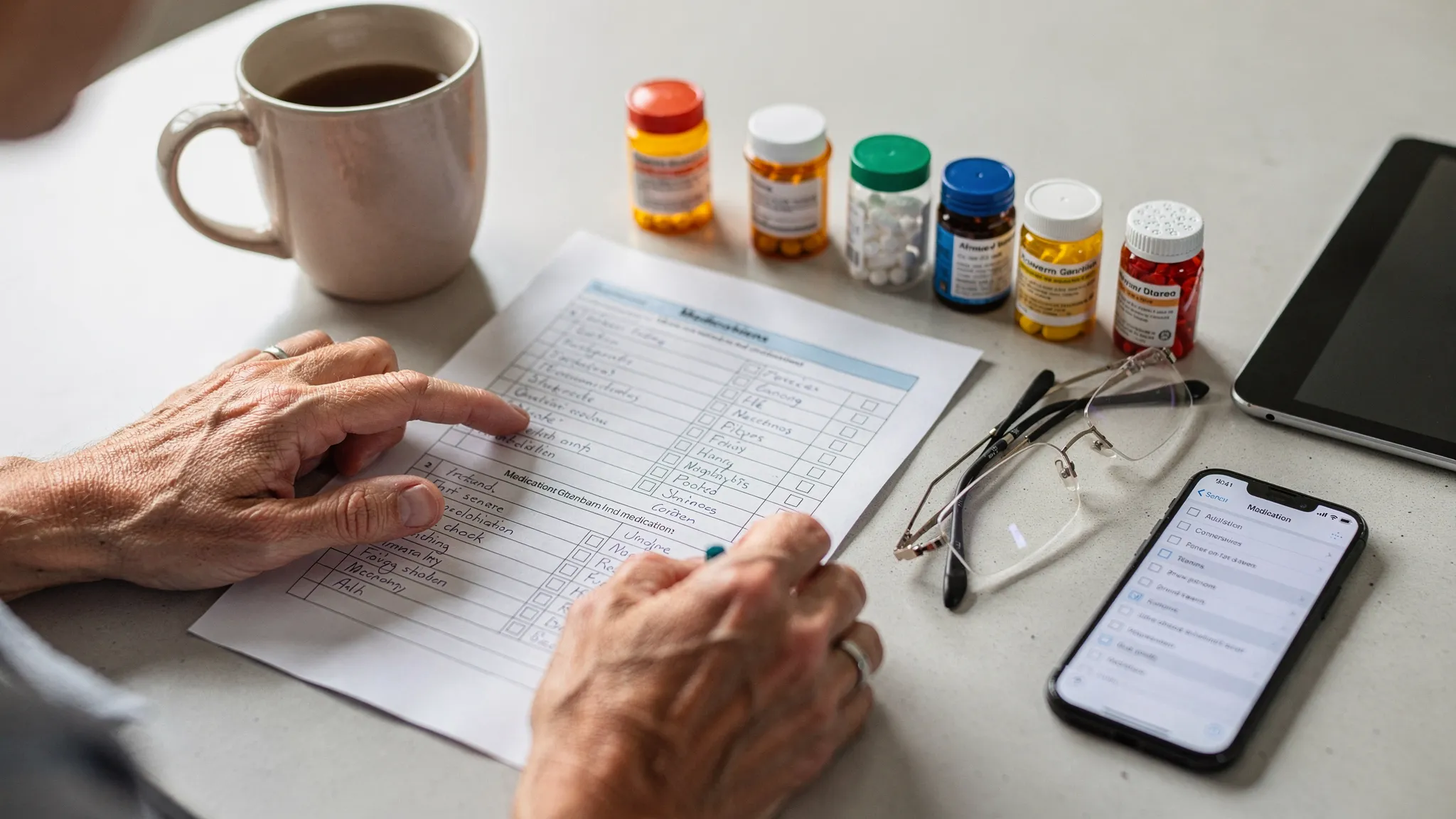
Keeping an up-to-date medication list is one of the simplest ways to reduce errors, avoid drug interactions, and make appointments smoother. It is also one of the most overlooked tools in day-to-day health management.
Just as importantly, a medication list is not only for your doctor. It can help you understand your own health better, connect symptoms to treatments, and manage chronic illness more confidently over time. When your clinician has an accurate, complete list, they can make safer adjustments, check for drug drug interactions, and coordinate care across specialists.
Below is what matters most: what a medication list is, why it is so valuable, what to include (without overcomplicating it), and safe ways to share it.
What counts as a medication list (and why it matters)
A medication list is a single place where you record everything you take for your health, not just prescriptions. Clinicians use this to do medication reconciliation (confirming what you take, how you take it, and what changed). That process is a major safety step, especially after hospital visits, specialist appointments, or any medication change.
A complete list typically includes:
Prescription medications
Over-the-counter (OTC) meds (pain relievers, acid reducers, allergy meds)
Vitamins and supplements
As-needed medications (inhalers, migraine meds)
A good medication list helps in high-stakes moments (urgent care, emergency visits, travel), but it is also useful in everyday chronic care. For example, when you are adjusting blood pressure meds, diabetes meds, inhalers, or antidepressants, your clinician needs a clear baseline to decide what to change and what not to change.
Why a medication list helps manage chronic illness
If you live with a chronic condition, medication changes are often iterative. Doses are titrated, medications are added or stopped, and side effects sometimes force substitutions. When the list is accurate, your care team can manage those changes with fewer assumptions.
Here is what a strong medication list enables:
Safer medication adjustments: Your clinician can change the right medication at the right dose, without accidentally duplicating therapy or missing something you already take.
Better drug drug interaction checks: Interactions are not just about prescriptions. OTC medications and supplements can matter, too.
Clearer symptom conversations: When you know what you take and why, it is easier to describe what is and is not working (and what might be causing side effects).
More coordinated care: Specialists and primary care clinicians often prescribe in parallel. A single list reduces conflicting changes.
In other words, the list is not busywork. It is part of understanding your health story.
What to include in your medication list (the minimum that makes it useful)
A medication list works best when it is complete enough to be clinically useful, but simple enough that you will keep it updated.
The essentials
At minimum, record:
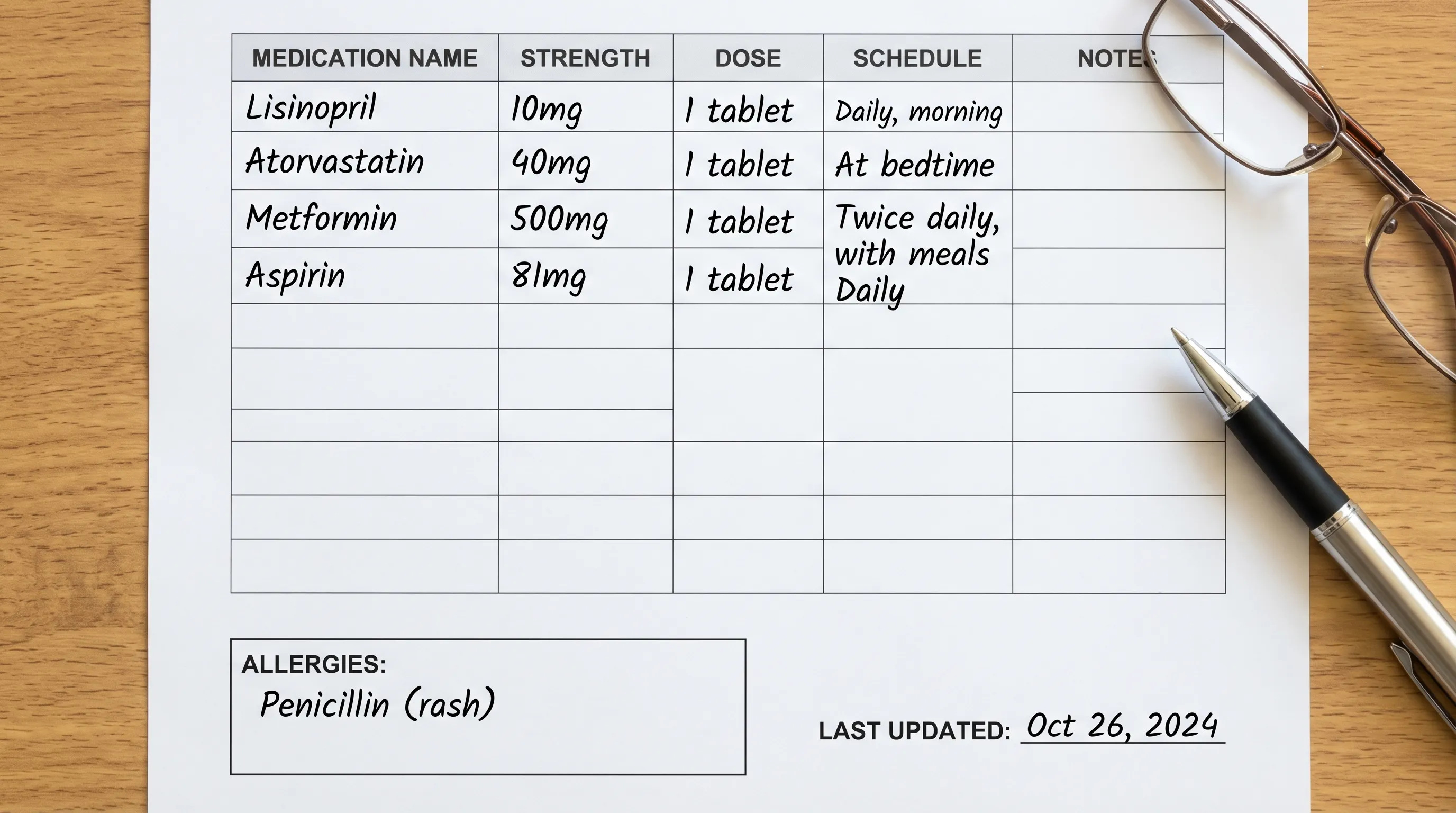
Medication name
Strength (for example, 10 mg, 20 mg)
Amount
How often you take it (daily, twice daily, once weekly, as needed)
Route (by mouth, injection, inhaled, topical)
The details that make it safer
If you can add a little more, these fields help clinicians make safer decisions:
Reason/indication (blood pressure, reflux, anxiety, pain)
Special instructions (take with food, avoid grapefruit, bedtime only)
Start date and, if relevant, stop date
Notes about side effects or adherence (for example, if you skip doses due to nausea, dizziness, cost)
Related information that prevents mistakes
Medication decisions are safer when your list includes context:
Allergies and reactions (for example, “penicillin: skin rash”)
Medical conditions that change prescribing choices (e.g. chronic kidney disease, pregnancy)
Preferred pharmacy
How to share your medication list safely (and who benefits)
A medication list is only helpful if the right people can access it at the right time.
Clinicians (primary care, specialists, urgent care)
Share your list at check-in or before the visit if the clinic allows uploads. This supports accurate medication reconciliation, reduces back-and-forth, and helps your clinician focus on decisions.
If you are discussing a medication change, a clear list helps your clinician:
Confirm what you are already taking
Identify possible duplications
Check for drug drug interactions
Adjust doses more safely
Pharmacists
Pharmacists can be an extra safety layer. A current list makes it easier for them to spot interactions, duplications, or confusing instructions, especially if you use more than one prescriber.
Caregivers and family
If someone helps manage refills or routines, a shared list reduces confusion, especially during emergencies or transitions like hospital discharge.
Your future self
When you can quickly see what you take and why, you can advocate for yourself more effectively, notice patterns (for example, when side effects started), and have more productive conversations at appointments.
Making medication lists easier with MyMeds
Routine doesn’t have to mean friction. If you’re tired of juggling scattered notes, photos, and spreadsheets, MyMeds: Pill Reminder is designed to provide a cleaner workflow—staying organized without the clutter.
Features that simplify your medication management include:
Unified medication tracking to keep everything in one place
Visual pill tracking to reduce “which one is this?” confusion
Dose reminders to support day-to-day adherence
Exportable medication lists for sharing with clinicians or caregivers
For a deeper understanding of your treatment, MyMeds: Pill Reminder includes AI-powered insights to help you learn more about your medications. (Disclaimer: Always consult a doctor or pharmacist for medical advice.)
You can learn more at MyMeds: Pill Reminder.